
Exercise Physiology at Home With My Aged Care
My aged care exercise physiology services help older adults rebuild strength, mobility, and daily independence directly in their own homes. Commonwealth home funding covers sessions run by university-qualified clinicians who treat chronic conditions and balance problems safely. You can access this clinical support through entry-level home grants or allocated package budgets across Sydney.
Key Takeaways
My Aged Care funds clinical movement sessions by university-trained clinicians, but excludes general gym memberships and personal training.
Funded home visits run through the Commonwealth Home Support Programme (CHSP), Home Care Packages (HCP), or the Support at Home system.
Sessions happen in your living room, using safe exercises tailored to your mobility, home layout, and chronic health needs.
A formal assessment through My Aged Care provides the necessary allied health referral code to start visits.
Dual-funding rules prevent claiming Medicare rebates and aged care package funds for the exact same consultation.
What Is an Accredited Exercise Physiologist in Aged Care?
An Accredited Exercise Physiologist (AEP) holds a four-year university bachelor or postgraduate degree and maintains clinical registration with Exercise & Sports Science Australia. We prescribe targeted physical activity as a clinical treatment to improve functional independence, cardiovascular health, and muscular stability.
Aged care requires a clear clinical focus. In Australia, 1 in 4 people aged 65 and over suffer a fall each year, according to national data published by Healthdirect Australia. Research from the Australian Institute of Health and Welfare shows that fractures represent 53% of all fall-related hospital admissions in older people, and 44% of these falls happen inside the home. We build physical resilience to help reduce the risk of balance loss and fall-related injuries.
Exercise Physiologist vs Physiotherapist vs Personal Trainer
Physiotherapists focus primarily on acute diagnosis, joint mobilisation, and hands-on muscle treatment. Personal trainers run general workouts for healthy people, but do not have clinical training for complex illnesses.
Exercise physiologists manage long-term recovery, chronic illnesses, and functional conditioning. We monitor blood glucose, heart rates, and joint load to keep movement safe.
Why Clinical Movement Is Funded While Gym Memberships Are Not
Government guidelines under My Aged Care exclude unsupervised gym memberships and sports passes from home care funds. General leisure passes lack structured medical oversight, measurable safety parameters, and clinical milestones.
Commonwealth funding supports allied health when an accredited clinician prescribes and supervises each session. This clinical standard ensures your funding targets measurable functional goals.
Understanding these clinical safeguards helps explain how the government structures its financial assistance programs.
How My Aged Care Funds In-Home Exercise Physiology
The aged care system has several funding streams based on your health requirements and living situation. Each path gives you access to clinical exercise where you live.
Commonwealth Home Support Programme (CHSP)
The Department of Health and Aged Care runs the CHSP to deliver entry-level support for older adults who need occasional help to live safely at home. Under this programme, the government subsidises individual and group allied health sessions. Clients pay a small, fixed co-payment per appointment.
Home Care Packages and Support at Home
Home Care Packages (HCP) range from Level 1 to Level 4, giving you a personal budget to cover daily care. Our team provides mobile visits through subcontracting agreements with your assigned package provider.
Under the Support at Home program, exercise physiology falls under the Clinical and Allied Health Support category. This structure includes a restorative care pathway designed to rebuild physical capacity and reduce reliance on daily domestic assistance.
Short-Term Restorative Care (STRC)
The STRC program provides early multi-disciplinary clinical care for up to eight weeks. The program helps you regain physical function after an illness, hospital discharge, or sudden drop in mobility.
Rules for Medicare and Private Health Insurance
Medicare provides up to five allied health visits each calendar year through a GP Chronic Disease Management plan (MBS item 10953). However, regulations from Services Australia prohibit claiming a Medicare rebate and aged care package funding for the same appointment.
Clients must select one funding pathway per visit. The Private Health Insurance Ombudsman also states that you cannot claim private health insurance rebates alongside public subsidies for the same clinical consultation.
Once you know which funding path suits your needs, you can begin the formal approval process.
How to Get In-Home Exercise Physiology Approved
Getting clinical support into your home requires four practical steps through the My Aged Care intake process.
Step 1: Initial Contact and Screening
Call My Aged Care on 1800 200 422 or apply online through the official portal. You will answer questions about your health, daily tasks, and personal mobility.
Step 2: The Face-to-Face Assessment
A Regional Assessment Service (RAS) assessor visits for basic CHSP care. An Aged Care Assessment Team (ACAT) assessor visits for package funding.
Tell the assessor: "I want allied health and exercise physiology to rebuild my balance and stay independent." You can show a GP medical summary to support your request.
Step 3: Receive Your Allied Health Referral Code
Once approved, My Aged Care generates an allied health referral code. This code links your approved funding directly to your preferred clinical provider.
Step 4: Book an Approved Mobile Clinician
Give your referral code to your provider or care manager. The provider sets up a service agreement and schedules your first appointment at home.
After your referral code is active and a clinician is booked, your treatment begins right where you live.
What Happens During an In-Home Visit?
Home visits match the clinical standards of our Castle Hill and Westmead clinics, using your everyday living space.
Our mobile team brings portable assessment equipment, resistance bands, and balance pads directly to your door. We design your therapy around the environment you navigate each day.
Mobility and balance checks test your walking speed, chair-rise ability, and balance reactions.
Home hazard checks review daily trip hazards like rugs, awkward steps, and narrow hallways.
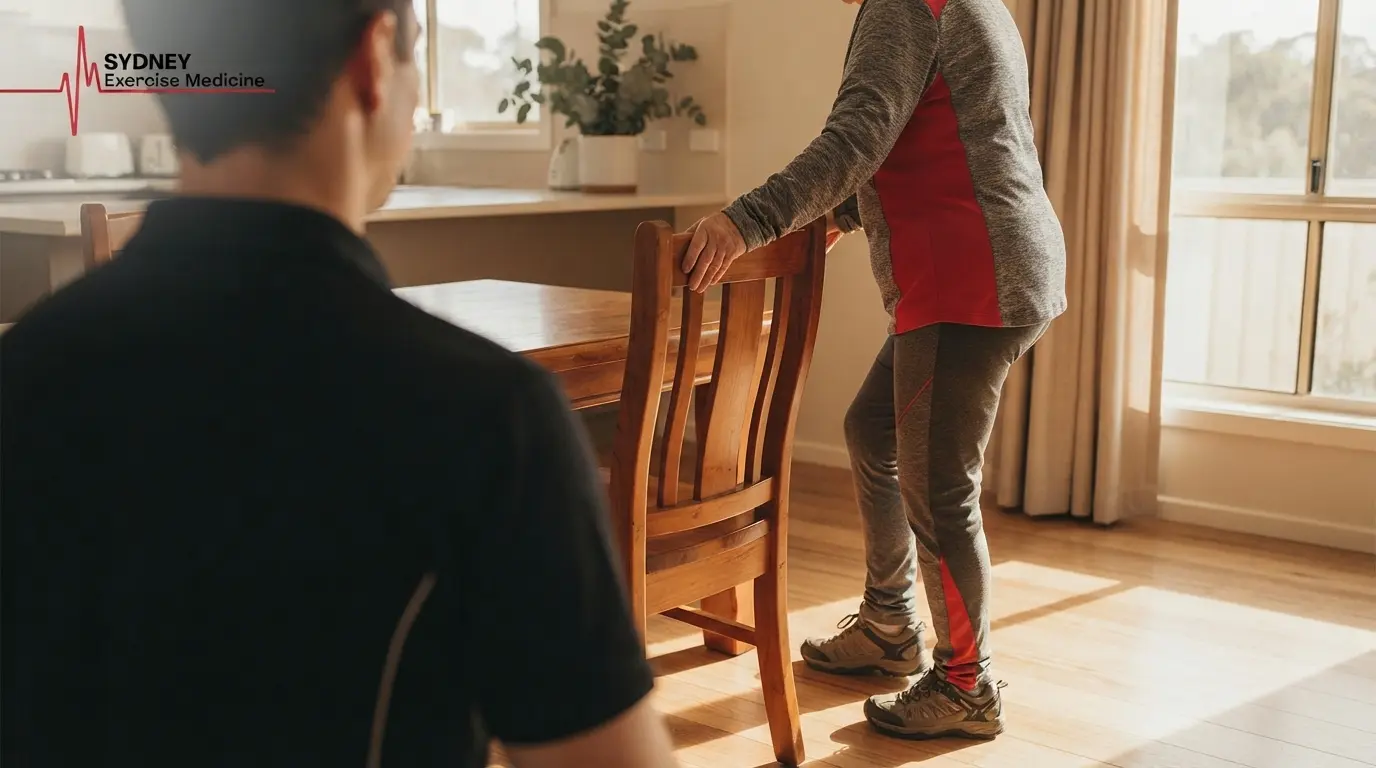
Functional strength exercises turn household furniture, such as dining chairs and benchtops, into safe exercise stations.
Personalised movement routines give you simple, safe movements to practise between our visits. Try these evidence-based balance exercises for seniors between visits.
Progress reporting sends regular clinical updates to your GP and package care manager.
These practical assessments allow us to tailor routines around specific long-term health challenges.
Managing Complex Health Conditions at Home
Home-based exercise programs help manage chronic health issues while protecting personal safety.
Falls Prevention and Mobility
Nearly half of all serious fall injuries happen inside the home during routine activities. We target lower-body muscle power, stepping reactions, and walking stability to keep you steady on your feet.
Osteoarthritis, Osteoporosis, and Bone Health
Joint stiffness and weak bones make daily activities painful. Evidence from Healthy Bones Australia shows that regular weight-bearing exercises stimulate bone mineral density and reduce fracture risks. We introduce safe axial weight-bearing routines that protect bone density without straining arthritic joints. Supervised programs like GLA:D Australia also reduce knee and hip pain.
Diabetes and Cardiovascular Health
Structured clinical exercise supports metabolic health and glucose control alongside your prescribed medical care. Regular muscle contractions help your body use glucose efficiently. Our team monitors your vital signs during every session to protect your heart health.
Neurological Health and Memory Support
Physical exercise supports healthy blood circulation in the brain. Clinical insights from Dementia Australia confirm that physical activity preserves cognitive function and helps manage daily physical symptoms. For people living with dementia or recovering from a stroke, gentle movement routines preserve motor planning skills and support daily mood.
Connecting these clinical benefits with local mobile care makes ongoing treatment simple and reliable.
Organising In-Home Exercise Physiology in Sydney
Living with pain, frailty, or reduced balance does not mean you have to leave your home for clinical care. Home visits are part of our mobile exercise physiology service.
Our clinicians travel across Sydney, including the Hills District, Parramatta, and Western Sydney suburbs. Our aged care exercise physiology service in Sydney covers falls prevention, strength and mobility. We also help families navigate package budgets to avoid unnecessary care costs.
Frequently Asked Questions
Can I choose my own exercise physiologist under My Aged Care?
Yes. Home Care Packages and Support at Home operate under consumer-directed care guidelines. You have the right to nominate your preferred clinical provider, as long as they hold valid insurance and professional ESSA credentials.
How much does an in-home exercise physiology visit cost?
If you have an approved Home Care Package, your allocated package funds can cover the session fees, subject to your package budget, care plan approvals, and provider agreement. If you use the Commonwealth Home Support Programme (CHSP), you pay a small, subsidised co-payment per visit.
What should I wear for a home exercise session?
Wear comfortable, loose-fitting clothing that allows you to move freely. Sturdy, closed-toe walking shoes or supportive runners are essential to ensure adequate grip and stability during balance practice.
What happens if exercise physiology was left off my original care plan?
You can request a support plan review by calling My Aged Care directly. Your assessor can update your approved service categories to include allied health without requiring a full reassessment.
Start Your In-Home Movement Program
Book an in-home assessment with our accredited clinical team to build strength and daily balance.