
How NDIS Capacity Building Exercise Supports Autistic Adults and Teens
NDIS capacity building exercise helps autistic teens and adults build strength, motor coordination, and daily independence through tailored physical programmes. Working with an accredited exercise physiologist provides a structured space to practice movement skills, support sensory needs, and build confidence for everyday activities.
Key Takeaways
Exercise physiology is funded under the NDIS Capacity Building budget through Improved Health and Wellbeing or Improved Daily Living categories.
Structured movement plans address common neuromuscular differences such as low muscle tone, motor planning delays, and sensory processing needs.
Regular clinical sessions build practical physical capacity for daily tasks, including climbing stairs, managing personal care, and carrying groceries.
Moving from supported therapy sessions into independent gym routines helps young adults establish lifelong physical autonomy.
Understanding NDIS Capacity Building Exercise for Autism
The National Disability Insurance Scheme funds allied health therapies to help participants develop functional abilities for daily life. When you access ndis capacity building exercise, you work directly with an Accredited Exercise Physiologist (AEP). These university-trained health professionals design clinical movement routines tailored to the neurological and physical profiles of neurodivergent individuals.
Funding for these clinical sessions sits within your Capacity Building support budget. Participants generally access exercise physiology through two main budget categories:
Improved Health and Wellbeing: This category directly covers physical wellbeing activities, fitness assessments, and individual exercise prescriptions.
Improved Daily Living: This category funds therapeutic supports that build functional movement skills, self-care ability, and everyday independence.
To receive funding, every service must satisfy the NDIS reasonable and necessary criteria. This standard ensures your movement plan connects to your personal plan goals, delivers measurable value, and relies on evidence-based health practices. Whether your funding is self-managed or plan-managed, you can select allied health clinics that accommodate your sensory and physical preferences.
Physical and Sensory Challenges Faced by Autistic Teens and Adults
Autism is a neurodevelopmental condition that often involves specific physical and sensory differences. According to the Australian Bureau of Statistics, autism affects roughly 1 in 40 Australians, creating a regular need for clear, neuro-affirming allied health care. Many autistic teens and adults experience motor control difficulties that make everyday physical activity feel tiring or awkward.
Motor planning, known clinically as dyspraxia, makes organising and carrying out physical sequences difficult. Autistic individuals also frequently present with hypotonia, or low muscle tone, alongside reduced core stability. These physical factors often result in an uneven walking gait, balance difficulties, joint hypermobility, and fatigue during school or work routines.
Sensory processing differences also shape how individuals interact with physical spaces. Bright lights, sudden loud noises, and crowded fitness centres can cause sensory overload. Because conventional gym environments present these barriers, reporting from the AIHW shows low rates of regular physical activity among people with disabilities. Structured allied health clinics address this issue by offering low-stimulus, predictable training spaces.
How an Exercise Physiologist Creates a Tailored Programme
Because physical capacity and sensory preferences vary, effective therapy begins with a detailed clinical assessment. We check joint range of motion, balance, posture, and stamina, while noting specific sensory triggers and personal interests.
To support safety and steady skill development, our practitioners structure each routine using two methods:
Regressions: We scale an exercise down to match your current comfort level, such as using a raised bench for squats to protect joint stability and reduce knee strain.
Progressions: Once you master an exercise with steady control, usually completing three sets of ten repetitions independently, we gradually increase the resistance or balance demand.
Predictability helps lower situational anxiety during exercise. We introduce clear visual schedules, step-by-step demonstrations, and quiet treatment rooms in our Castle Hill and Westmead clinics. If travelling to a clinic is difficult, we deliver home visits or coordinate sessions through our Telehealth services to maintain a supportive, familiar routine.
Key Benefits of Exercise Physiology for Autistic Individuals
Engaging in regular exercise can support physical, neurological, and emotional wellbeing. By focusing on purposeful movement patterns, autistic teens and adults build capacity across several areas of health:
Motor skills and balance: Single-leg balance drills and coordination tasks aim to improve body control, spatial awareness, and agility.
Sensory regulation: Weighted movements provide deep proprioceptive input to the muscles and joints, designed to help calm sensory overload.
Postural stability: Core strengthening exercises reduce physical fatigue and support comfortable sitting or standing posture throughout the day.
Mental health and sleep: Structured physical activity helps manage anxiety, releases physical tension, and promotes healthy sleep routines.
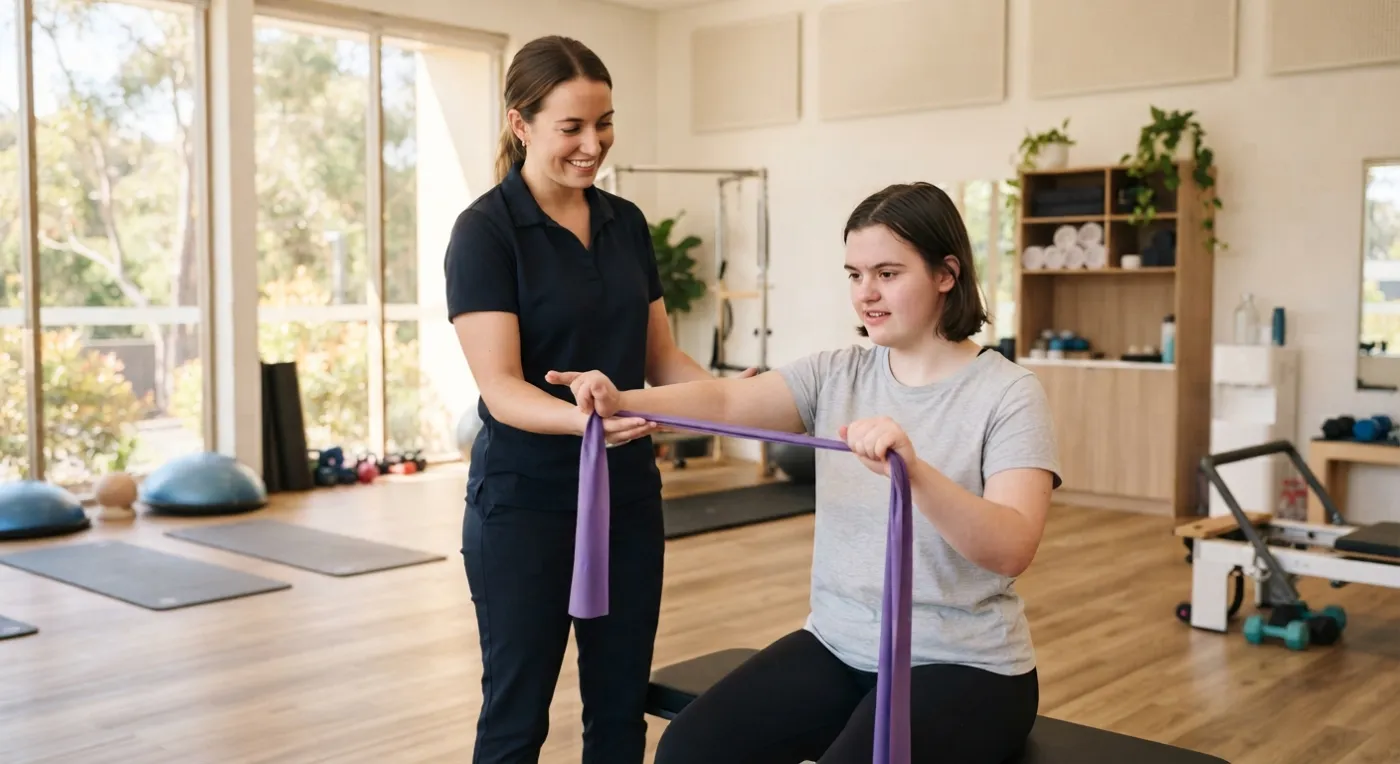
Deep-pressure exercises, such as carrying weighted medicine balls or working against resistance bands, offer proprioceptive feedback. This input helps the brain map where the body is in space, which can assist in grounding the nervous system during periods of stress. Structured movement is recognised by ESSA as an effective clinical intervention for lifting mood, reducing anxiety, and building confidence.
Turning Physical Strength into Daily Living Independence
The core objective of capacity building supports is building independence in daily life. Rather than training isolated muscles, exercise physiology focuses on fundamental movement patterns, including squatting, pushing, pulling, and carrying, because these mirror everyday functional tasks.
Targeted upper-body and grip training prepares participants to carry school bags, manage laundry loads, and bring in groceries without strain. Lower-body strength exercises build the power needed to climb stairs smoothly, navigate public transport, and stand up from low chairs without assistance.
As autistic teens transition into adulthood, their recreational interests often shift toward individual fitness activities such as running, swimming, or gym workouts. Our team at Sydney Exercise Medicine coaches participants on proper gym etiquette and equipment safety. This preparation gives young adults the confidence to exercise independently in community recreation centres, creating sustainable habits of self-care and community participation.
Practical Steps to Access Services Through Your NDIS Plan
Setting up an exercise physiology programme under your NDIS package is straightforward when you follow these organised steps:
Check your plan budget: Confirm you have available funding allocated under Capacity Building, specifically within Improved Health and Wellbeing or Improved Daily Living.
Review your plan goals: Check that your plan includes goals related to physical health, daily independence, motor skill development, or community participation.
Gather clinical documents: Collect any existing assessment reports from your GP, paediatrician, or allied health team that highlight your motor coordination or physical support needs.
Coordinate with your support team: Ask your support coordinator or plan manager to connect you with an accredited exercise physiologist and set up a service agreement.
Monitor progress for plan reviews: Your practitioner will compile formal functional progress reports with objective outcome data to support ongoing funding during future plan reviews.
For individuals who also require assistance with home modifications, sensory equipment, or school adjustments, combining physical therapy with our occupational therapy services provides a coordinated, multidisciplinary support network.
Frequently asked questions
Can I use my NDIS plan for gym memberships?
The NDIS funds the clinical services and therapy delivered by an accredited exercise physiologist. Standard gym entry fees or commercial membership passes are generally considered everyday living expenses and are not covered unless specifically approved in your plan.
What is the difference between a personal trainer and an exercise physiologist?
An accredited exercise physiologist holds a four-year university degree in clinical exercise prescription, with training in chronic conditions, neurodivergent support, and motor rehabilitation. A personal trainer completes vocational fitness certificates focused on general fitness coaching.
How often should an autistic teen or adult attend sessions?
Most participants start with one or two individual sessions each week. This frequency allows sufficient practice to learn movement mechanics, establish a predictable sensory routine, and achieve steady functional gains.
Ready to Build Strength and Confidence?
Book a clinical assessment with our allied health team to start your tailored movement plan today.